
Why Your Brain Prefers a Forest to a Hallway
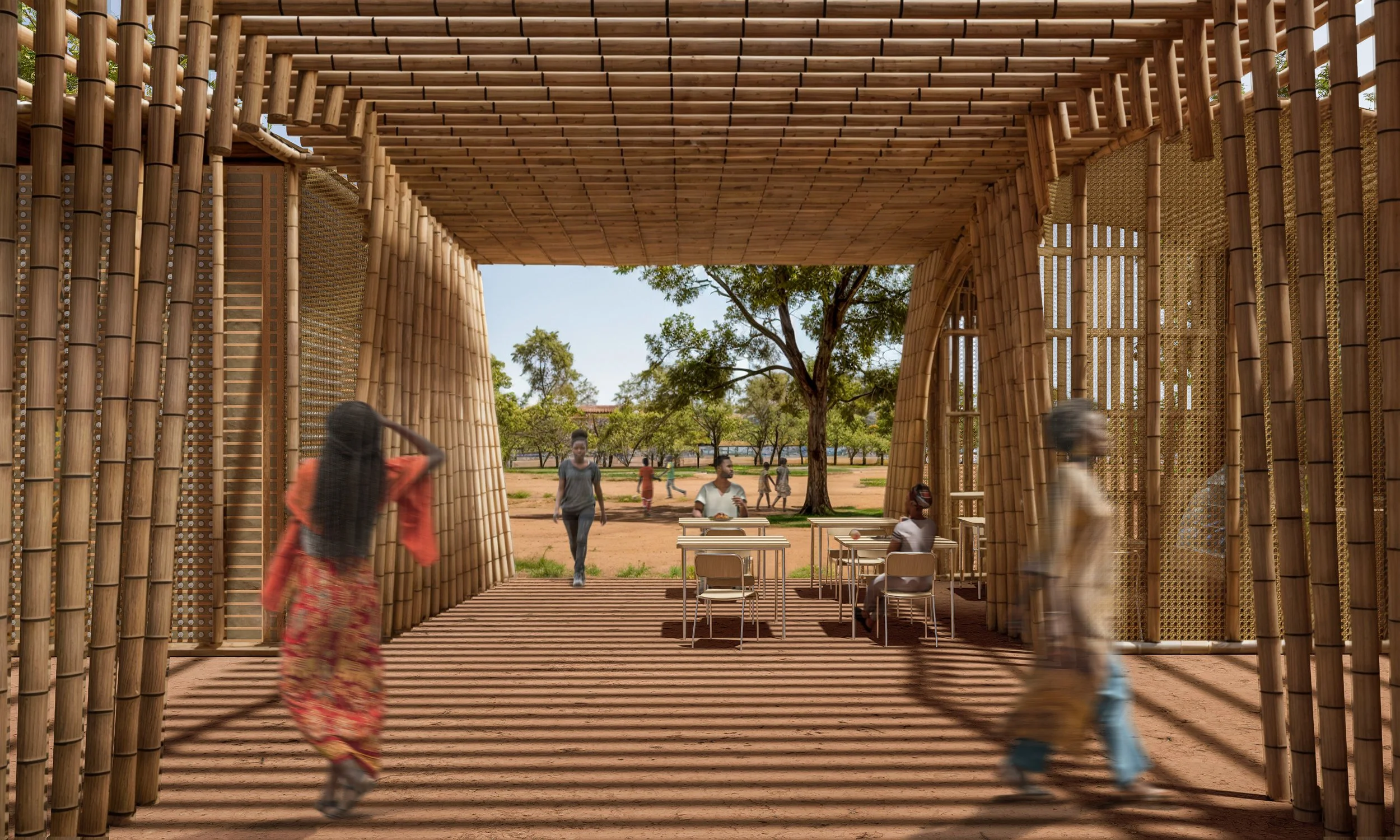
The human visual system evolved surrounded by fractal patterns, branching trees, coastlines, rock formations, and it still processes that kind of complexity more easily than the straight lines and flat surfaces of most buildings.
The Science
Researchers call this effect fractal fluency. Fractals are patterns that repeat at different scales, a tree’s branches echoing its twigs, a coastline’s bays echoing its inlets, and the mid-complexity range of these patterns, not too simple, not too dense, is the easiest for the human visual system to process. In landscape studies, people tend to prefer that range (Hagerhall, Purcell and Taylor, 2004).
That ease of processing shows up in the body. Skin-conductance studies, a reliable marker of physiological stress, find lower stress activation when people view mid-complexity fractal patterns compared to the low-complexity straight lines common in most interiors. EEG studies find something similar in the brain itself: viewing these patterns is linked to a rise in alpha-band activity, the frequency range associated with a relaxed, wakeful state.
The effect holds whether the fractal shows up in a literal view of nature, a window onto trees or water, or in the patterning of a building’s own materials and surfaces, a timber screen, a woven facade, the grain of real wood. The nervous system responds to the pattern, not to whether it came from outside or was designed in.
Why It Matters
A spa or a single curated room can rely on novelty for thirty minutes. A home, or a wellness facility used every day, has to hold up under constant, close attention, and that is where fractal fluency becomes a design tool rather than a decorating choice.
In longevity and wellness architecture, this research shapes two decisions in particular. First, pattern: where a surface repeats, a screen, a lattice, a railing, the repetition is tuned to that mid-complexity range rather than left either perfectly uniform or randomly textured. Second, material honesty: natural materials point in the same direction. In a hospital-room study, cortisol levels were significantly higher in a conventional room than in one redecorated with natural wood panels (Ohta et al., 2008). Real material, chosen for how it ages and how it reads up close, is not a finish decision. It is part of how the space is experienced at a nervous-system level, every day it is occupied.
In longevity and wellness architecture, this research shapes two decisions in particular. First, pattern: where a surface repeats, a screen, a lattice, a railing, the repetition is tuned to that mid-complexity range rather than left either perfectly uniform or randomly textured. Second, material honesty: natural materials point in the same direction. In a small study of seven healthy men staying in a hospital isolation room, cortisol was lower in a room redecorated with natural materials, wood paneling and Japanese paper, than in a conventional room (Ohta et al., 2008). Real material, chosen for how it ages and how it reads up close, is not a finish decision. It is part of how the space is experienced at a nervous-system level, every day it is occupied.
How We Design With It
At ARCNOMA, we apply this research to homes and health facilities designed to be lived in every day. You can see how it informs our Maternity Center project, or get in touch to talk about yours.
Frequently Asked Questions
What is fractal fluency?
The idea that the visual system processes mid-complexity fractal patterns, the kind found in nature, with particular ease. Research links viewing those patterns to lower physiological stress.
How can architecture use it?
By tuning repeating surfaces, such as screens and lattices, to that mid-complexity range, and by using real materials chosen for how they look and feel up close. The evidence is stronger for the visual patterns than for materials, where the studies are smaller.