
04 | Passive House Residences
A Passive House is usually sold on its energy bill. Human Comfort Lab makes the case that its real value is what a sealed, continuously ventilated envelope does for the people inside it, day and night, whether they notice it or not.
The Transition: From energy efficiency as the headline to comfort and cognitive performance as the headline, with the energy savings as the byproduct.
Sensory Strategy: Atmospheric Constancy.
The brain's cognitive and autonomic systems perform best within a narrow, stable range of air quality and temperature. Conventional homes fluctuate constantly: CO2 climbs overnight, temperature swings with the weather and with HVAC cycling, because ventilation and heating are intermittent rather than continuous. A Passive House envelope removes that variability by design, through continuous mechanical ventilation with heat recovery (MVHR) and an airtight, thermally unbroken shell.
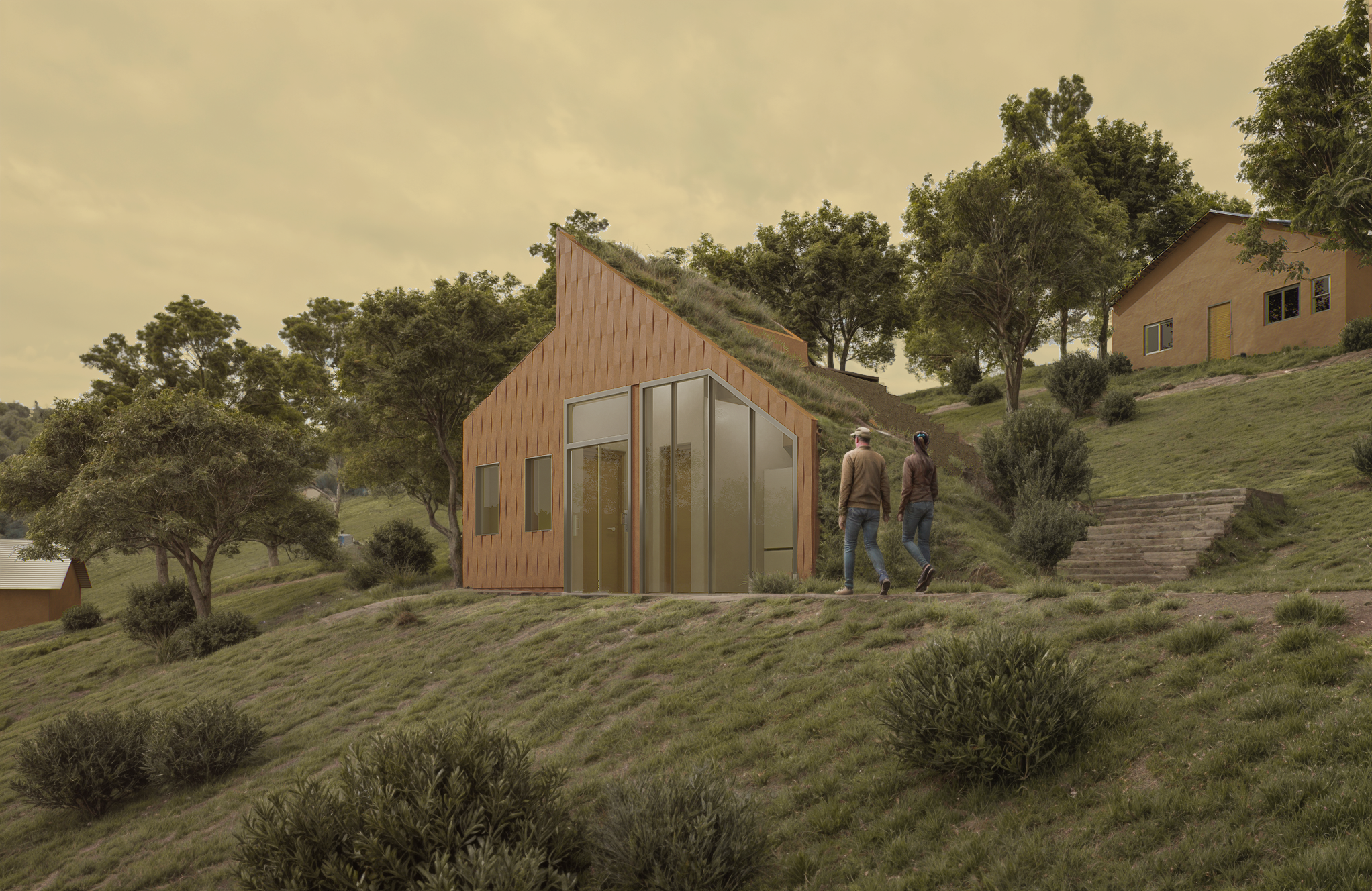
Harvard's COGfx research found that cognitive test scores drop measurably as indoor CO2 and fine particulate matter rise, with no floor at which the effect disappears; even buildings meeting standard air quality guidelines showed further cognitive gains from added ventilation. A related Harvard study of people working from home during COVID found that indoor temperature swings, either too warm or too cool, independently worsened performance on standardized attention and problem-solving tests, even when CO2 stayed within normal ranges. Separately, field studies comparing highly energy-efficient (passive house standard) homes to conventional naturally ventilated homes have found better self-rated health, wellbeing, and housing satisfaction among the passive house occupants.
Tactile Palette:
We treat the building envelope itself as the primary comfort intervention. Continuous, filtered mechanical ventilation with heat recovery (MVHR) keeps CO2 and particulate levels flat and low around the clock, instead of spiking overnight or during cooking as in a conventional home. Continuous insulation and the removal of thermal bridging eliminate the cold spots and drafts that otherwise force the body to keep adjusting to its surroundings.